Essential Gear Care
How to Properly Maintain Your Shaving Gear
Practical guidelines for cleaning, drying, and storing your razors and brushes to maximize performance, hygiene, and lifespan.
Tool Longevity Guide
Why Daily and Weekly Maintenance Protects Your Skin and Shave
Investing in high-grade shaving equipment pays off only when tools receive proper care. Mineral buildup, trapped lather, and moisture compromise blade sharpness and breed bacteria in brush bristles. Following a disciplined maintenance routine prevents corrosion, eliminates skin irritation, and ensures flawless cutting efficiency for years.
01. Article Quick Reference
| Rinse Frequency | After every shaving stroke & complete session |
|---|---|
| Deep Cleaning Schedule | Bi-weekly with mild dish soap or diluted vinegar |
| Drying Method | Vertical brush stand & open-air razor rack |
| Storage Area | Well-ventilated dry space away from shower steam |
02. Detailed Breakdown
Complete Maintenance Protocols for Razors, Brushes & Blades
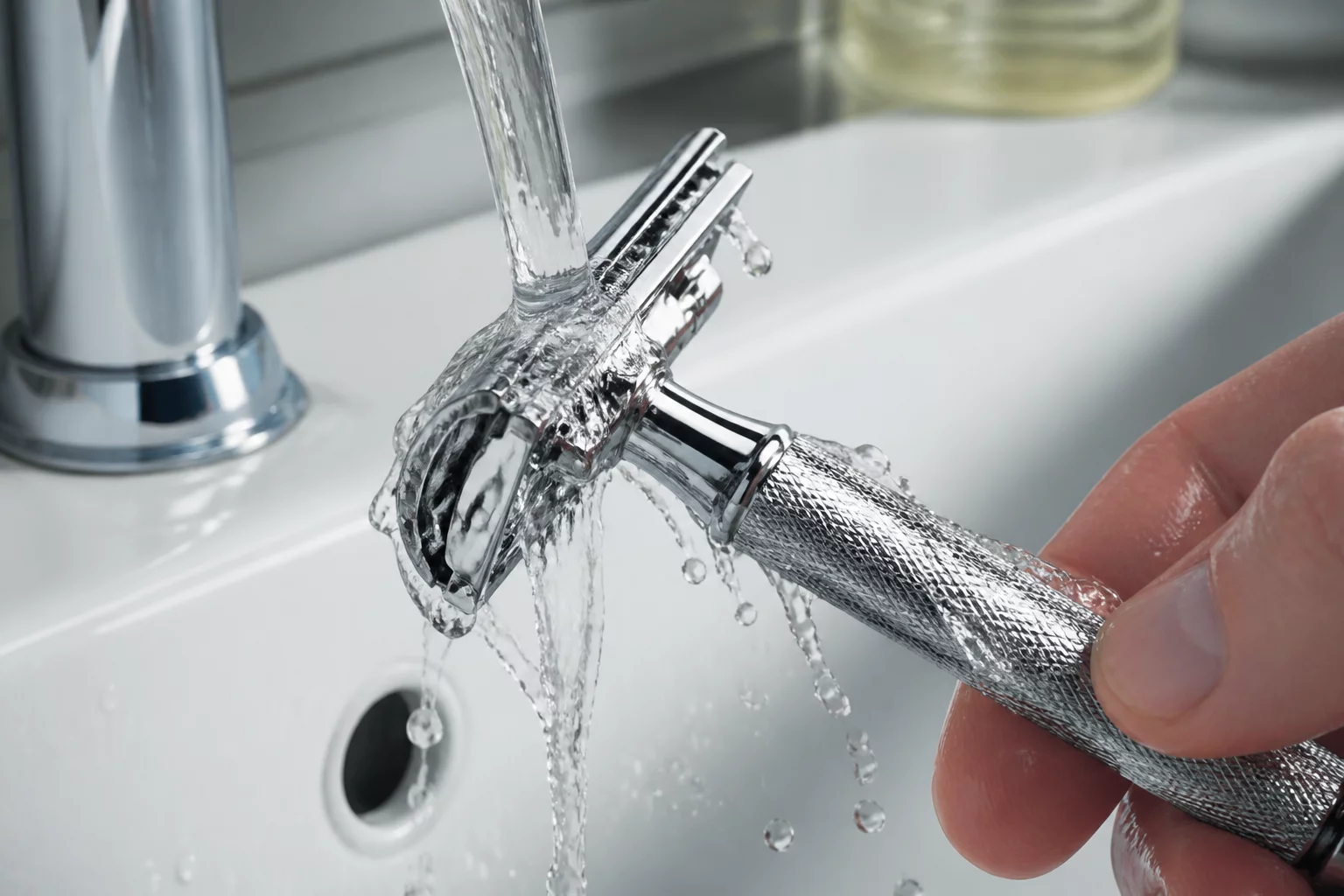
Rinse the razor head under warm running water during and after each pass to dislodge hair shavings and soap residue. Loosen the head slightly to flush out stubble trapped beneath the blade bed. Avoid banging the razor head against the sink rim, because minor impacts misalign the guard combs and damage chrome plating.
Disassemble the three-piece razor every two weeks for deep sanitization. Soak the metal components in warm water mixed with a few drops of dish soap, then scrub gently with a soft-bristled toothbrush to remove stubborn limescale. For hard water deposits, soak parts in a 1:4 white vinegar and water solution for five minutes, rinse thoroughly, and pat dry with a microfiber cloth.
Rinse your badger, boar, or synthetic shaving brush thoroughly under lukewarm water until all traces of lather vanish from the knot core. Squeeze the excess water gently with your fingers without twisting or pulling the delicate hair strands. Flick the brush downward two or three times over the sink to expel lingering moisture.
Hang the brush upside down on a dedicated stand in a room with adequate air circulation. Storing brushes upright on bathroom counters allows water to drain into the glue knot, causing mildew and loosening the bristles over time. Never store damp brushes inside enclosed medicine cabinets or travel tubes.
Dull or oxidized blades cause painful pulling and microscopic skin tears. Most double-edge razor blades yield three to six clean shaves before replacement becomes necessary. Never wipe blade edges with towels, as friction degrades the microscopic Teflon or platinum coatings that ensure frictionless gliding.
Deposit discarded blades directly into a sealed metal blade bank to prevent injury during household waste handling. When traveling, transport razors in protective leather pouches or fitted head guards, and store brushes in ventilated travel cylinders to protect bristles from mechanical deformation.
A well-crafted razor and premium brush can easily outlive their owner when spared from moisture entrapment and cleaned with consistent care.
Joseph Martinez, Master Barber & Grooming Specialist
Upgrade Your Shaving Setup Today
Explore our precision-crafted safety razors, stainless steel drying stands, and natural badger brushes.