Grooming Heritage
A History of Men's Shaving Tools
Take a journey through time and explore how shaving tools have evolved from sharpened stones to precision-engineered multi-blade cartridges and safety razors.
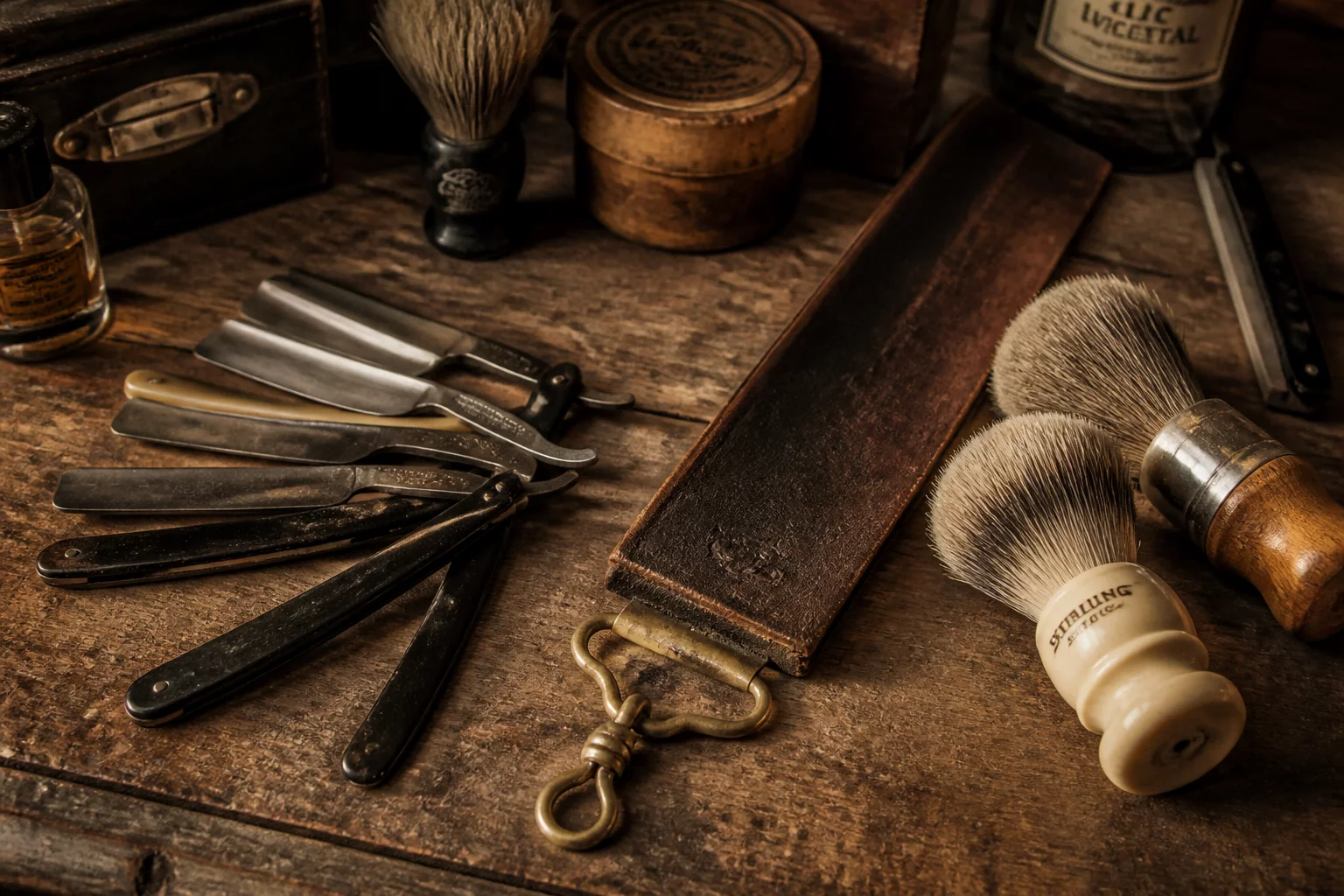
Historical Evolution
The Millennia-Long Pursuit of the Smooth Shave
Facial hair grooming is among humanity's oldest rituals. Early hunters scraped stubble using volcanic glass, while later civilizations forged bronze, steel, and ergonomic safety devices to refine the morning routine.
01. Article Quick Reference
| Earliest Implements | Flint flakes, obsidian, and clam shells (c. 30,000 BCE) |
|---|---|
| First Metal Blades | Egyptian bronze & copper razors (c. 3000 BCE) |
| Straight Razor Boom | Sheffield crucible steel cut-throats (1740s–1800s) |
| Safety Razor Era | Disposable double-edge blade patent (1901) |
02. Detailed Breakdown
Chronicles of Blade Craft and Daily Rituals
Archeological findings reveal that Neanderthal hunters chipped volcanic obsidian and flint into razor-sharp edges around 30,000 BCE. Facial hair in freezing conditions collected moisture that froze rapidly against sensitive skin, creating a functional health necessity to stay trimmed.
By 3000 BCE in Ancient Egypt, shaving transformed into a cultural symbol of purity and status. Egyptian nobility shaved both heads and beards using solid bronze and copper razors, applying unguents formulated from animal tallow, castor oil, and scented herbs to protect the skin from harsh desert climates.
During the 18th century, English metallurgist Benjamin Huntsman invented crucible cast steel in Sheffield. This breakthrough produced clean, uniform steel blades capable of maintaining exceptional hollow-ground bevels and razor-sharp cutting edges through daily use.
The resulting folding straight razor—often called the cut-throat—dominated men's grooming for over a century. Maintaining these blades demanded skilled stropping on cowhide leather, water-stone honing, and steady wrist control, making neighborhood barbershops the vibrant center of men's social routines.
In 1901, King C. Gillette and engineer William Nickerson patented the stamped double-edge disposable blade mounted inside a guarded safety comb. This eliminated the danger of accidental cuts and removed the necessity of constant whetstone blade maintenance at home.
While plastic multi-blade cartridges dominated the late 20th century, modern shavers are actively returning to classic double-edge safety razors. The timeless single-blade architecture minimizes tugging, prevents ingrown hairs, reduces plastic waste, and restores mindfulness to everyday grooming.
The history of men's shaving shows that true comfort comes not from adding more blade layers, but from mastering blade geometry, quality lather, and deliberate technique.
Charles Garcia, Shaving Historian & Contributor
Experience Time-Tested Shaving Precision
Discover our collection of precision-engineered safety razors, rich lathering brushes, and classic grooming kits.